Beyond the Bargain Bin: Why Shin, Chuck and Brisket Make Better Winter Beef
The cheaper cut is not the lesser cut
There is a particular kind of false economy in the meat aisle. It is the assumption that a cheap cut is simply a poor version of an expensive one, to be bought only when the budget is tight. In our view, that misses the point of beef entirely. Shin, chuck and brisket are not bargain-bin scraps. They are cuts with a different job to do, and when they are cooked with patience, they can produce deeper flavour than a lean roasting joint at twice the price.
The economy is not in the label alone. It is in the relationship between cost, cooking time and the number of good meals that come from one piece of meat. A well-bought piece of shin can give a Sunday braise, a midweek ragu and a small pie. A brisket can serve a crowd and still leave enough for sandwiches. The false economy is buying a cheap cut and cooking it as though it were a steak.
What makes these cuts different
Shin, chuck and brisket come from hard-working parts of the animal. They contain connective tissue, which is why they can seem tough when cooked quickly. Under gentle, moist heat, that tissue softens into gelatin, giving the sauce body and the meat a spoonable texture. Chuck also carries a good amount of fat and marbling, which is why it makes such a generous braise. Brisket has a coarse grain and a rich beef flavour that stands up to long cooking.
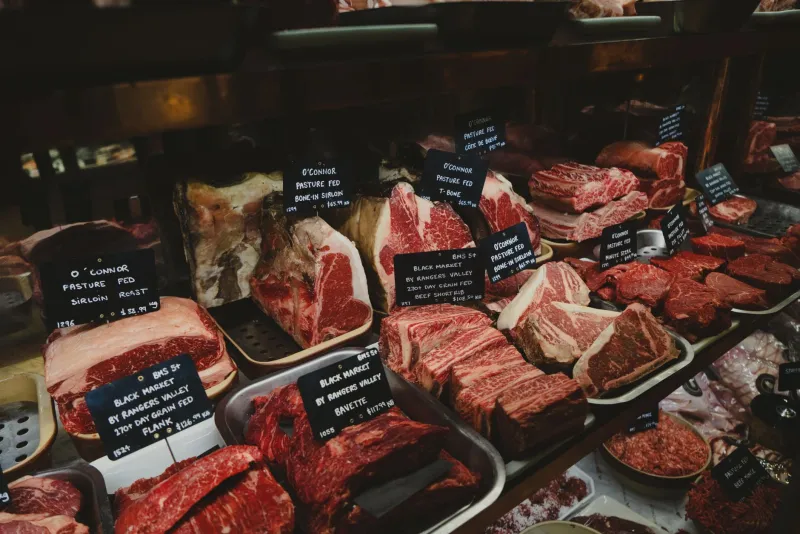
At Lyme Bay Butchers, the starting point is the beef itself. Native breeds, proper ageing and a good fat cover matter more than a fashionable cut name. A well-aged chuck from a local animal will often outperform a poorly handled premium cut. The butcher’s craft is in choosing the right piece for the pot, not in dressing up a lean joint as something it is not.
What to ask at the counter
For shin, ask for thick rounds cut across the bone, or for boneless shin if you prefer neat pieces. The bone gives flavour and body to the sauce. For chuck, ask for a whole piece rather than ready-diced cubes if you can; you can cut it yourself and control the size. For brisket, ask whether it is rolled, flat or point, and be guided by the butcher on which will suit a slow oven braise rather than slicing.
It is also worth asking how the beef has been aged and what breed it is. A good butcher will not be offended by the question. Ask for a piece with some fat and connective tissue, not a trimmed, lean block. If you are buying for the freezer, ask for it cut and wrapped in meal-sized portions. This is where the value becomes practical: one order, several winter meals.
The braise that does the work
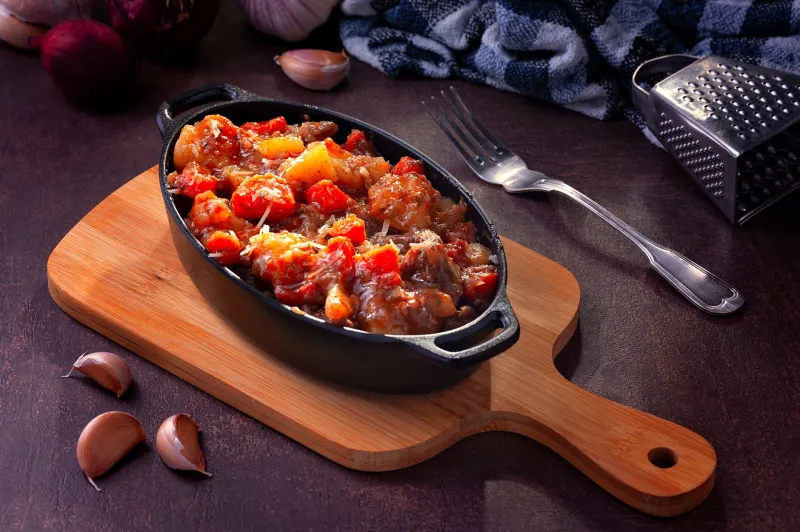
A slow braise is not a vague instruction to cook something for a long time. It is a method. Season the beef and brown it properly in a heavy pan; do not rush this stage. Set the meat aside, soften onions, carrots and celery, then add stock, cider or red wine and return the beef to the pan. The liquid should come about halfway up the meat, not cover it completely. Cover the pan and cook at 140 to 150°C for three to four hours, checking after two and a half.
The meat is ready when a knife slides through without resistance. If it is still tight, give it more time rather than more heat. A hard boil will toughen the fibres and leave the sauce greasy. Rest the meat in its liquid for twenty minutes before serving, then skim any excess fat from the sauce. The result should be rich, glossy and deeply savoury, with enough sauce to spoon over mash or polenta.
Leftovers with a second life
The real value of a slow-cooked cut appears on the second day. Shredded shin makes a fine ragu for pasta or a filling for a pie. Chuck, cooled in its sauce, can be reheated gently with butter beans for a quick supper. Brisket slices well for sandwiches with mustard and pickles, or can be chopped into a hash with potatoes and cabbage. Keep the braising liquor; it is stock and sauce in one.
Cheap cuts are not a compromise. They are a different kind of cooking, and a very old one at that. Bought well, cooked slowly and used completely, they offer the honest value that a local butcher understands best: good meat, properly prepared, with nothing wasted.