Order Early, Roast Calmly: A Lyme Bay Butcher’s 2026 Christmas Meat Plan
Begin with the headcount, not the bird
As of 7 November 2026, the Christmas order book is already open in earnest. Along the West Dorset and East Devon coast, the best turkeys, native-breed beef and salt-marsh lamb are not produced in unlimited quantities. The calmest Christmas cooks are not the ones who leave everything to the last week; they are the ones who decide now, order early and then allow the butcher to do the quiet work of preparation.
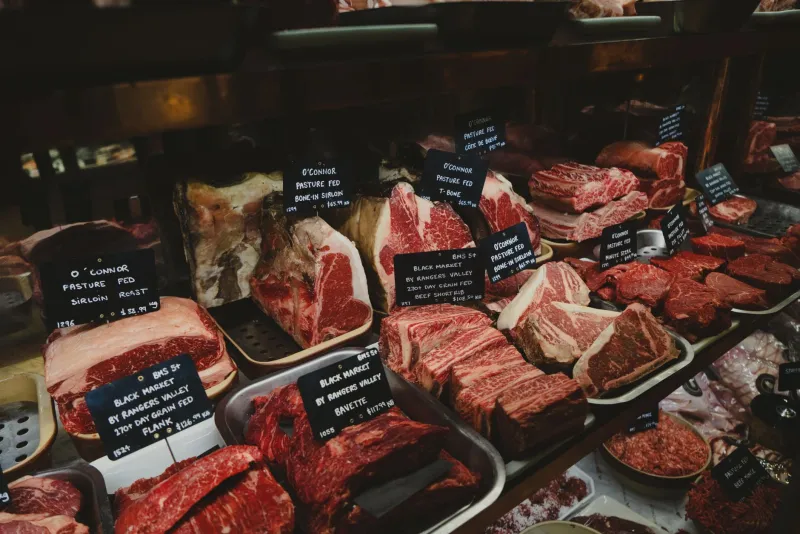
A local butcher is not simply a counter for collection. A good one will help you judge size, advise on breed and ageing, prepare a joint to fit your oven, and tell you honestly whether your planned menu is too much. That conversation is easiest in November, not on Christmas Eve.
Choose the centrepiece that suits the table
Turkey remains the traditional choice, and a free-range or organic bird from a known farm will repay careful cooking. Allow roughly 450 to 500g of raw weight per person for a bone-in turkey if you want proper leftovers, or 350 to 400g for a boneless joint. A 5kg bird will usually serve ten to twelve people with some meat left for Boxing Day.
Beef is the choice for those who prefer a simpler roast. A dry-aged rib or sirloin on the bone will need about 300 to 350g per person; boneless joints need around 200 to 250g. Lamb works well for smaller gatherings, with 350 to 400g per person on the bone and 250 to 300g boneless. A mixed centrepiece, such as a small turkey crown with a rolled beef joint or a shoulder of lamb, can be sensible for a table with different tastes, but plan 250 to 300g of total raw meat per person across the joints and add extra only if leftovers matter.
A December timeline for Lyme Bay kitchens
- Now to 14 November: settle the number at the table, choose the centrepiece and place the order. A deposit is normal for Christmas poultry and large beef joints.
- 15 to 30 November: confirm the collection date, the exact weight and whether the joint will be fresh or frozen. Check fridge and freezer space before committing.
- 1 to 10 December: finalise the order and add sausages, bacon or a Boxing Day pie joint if required. Confirm collection times.
- 11 to 18 December: collect any frozen turkey or beef and keep it frozen until the correct defrosting window. Do not move it to a warm room.
- 19 to 23 December: collect fresh meat and store it in the coldest part of the fridge, ideally between 0°C and 4°C. Keep it covered and away from cooked foods.
- 24 December: if defrosting a frozen bird, allow 10 to 12 hours per kilogram in the fridge and place it on a tray to catch drips. Prepare vegetables and stuffings, but keep raw meat separate.
- 25 December: cook with a thermometer, rest the meat properly and do not crowd the oven.
- 26 December: turn leftovers into a second meal rather than leaving them to dry out.
Storage and defrosting without guesswork
Fresh meat should stay cold, covered and separate from ready-to-eat foods. A fridge thermometer is a small investment that removes much of the anxiety from Christmas cooking. If the turkey is frozen, defrost it slowly in the fridge, never at room temperature, and allow enough time. A 5kg bird may need two full days or more. Once defrosted, keep it chilled and cook it within one to two days.
A large joint should sit on a rimmed tray, not directly on a shelf. This protects other foods from drips and makes the cold chain easier to manage. If space is tight, ask the butcher to prepare a smaller joint rather than buying something that will not fit safely.
Cooking temperatures that protect the meat
For turkey, the thickest part of the thigh should reach 74°C, and the juices should run clear. Beef is a matter of preference: 52 to 55°C for rare, around 60°C for medium and 70°C for well done. Lamb is best at 55 to 60°C for pink meat. Always rest large joints for at least twenty to thirty minutes before carving; this allows the juices to settle and makes the meat easier to slice.
Boxing Day without boredom
Cold turkey with pickles is a fine start, but the real economy of a Christmas joint is in the second and third meal. Sliced beef can become a hash with potatoes and onions. Leftover lamb is excellent in a shepherd’s pie or a rich broth. Turkey can be folded into a pie with leeks and a little cream, or turned into a clear soup with the carcass. The principle is simple: keep the meat moist, add something sharp or savoury, and do not reheat it more than once.
Ordering early is not an affectation. It is the practical way to secure good meat from a local supply, to avoid the crush of the final week and to give yourself time to cook well. A calm Christmas table begins at the butcher’s counter in November.