Feather and Fur at the Counter: Choosing Game with Confidence This Autumn
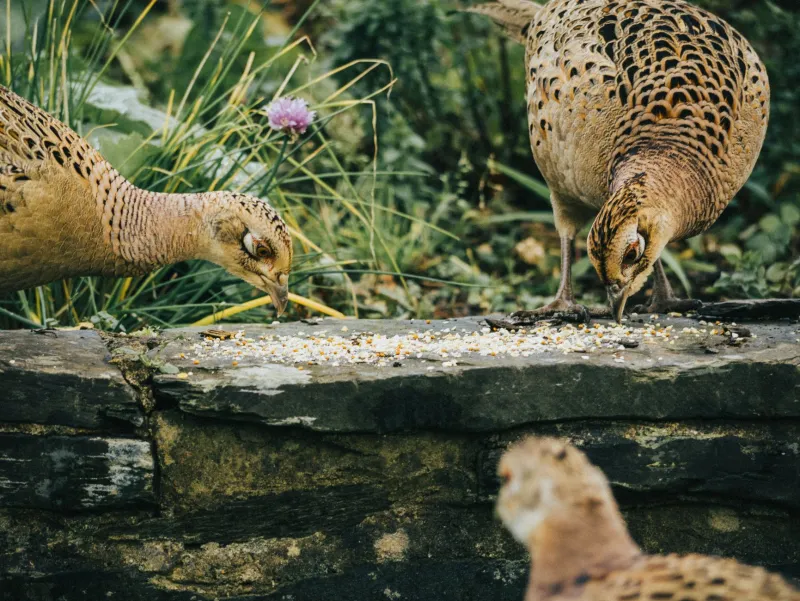
Late autumn is when the West Country butcher's counter begins to change character. The familiar joints are still there, but alongside them appear birds with a deeper colour and a fuller scent, and perhaps a haunch of venison that looks less like a weeknight purchase than a small commitment. Game has a reputation for being difficult. In practice, most of the difficulty lies in not knowing what to ask. Once that is settled, pheasant, partridge and venison are among the most straightforward meats a home cook can put in the oven.
Why game belongs beside your usual cuts
Game is not a novelty to be saved for a special occasion. It is seasonal meat in the truest sense: reared or managed locally, available when the season allows, and best cooked with the same common sense you would apply to a chicken or a leg of lamb. Pheasant and partridge bring a lean, firm texture and a flavour that sits somewhere between chicken and a richer red meat. Venison is closer to beef in colour and depth, though it is noticeably leaner. None of them needs a specialist larder or a weekend course. They need a butcher who can tell you what you are buying and a cook who is willing to pay attention.
At a Lyme Bay counter, game should feel like part of the same conversation as beef, pork and lamb. The question is not whether you are the sort of person who cooks game. The question is what is in good condition this week, how long it has been hung, and what you want to put on the table.
What to ask at the counter
A good butcher will welcome the questions that matter. Ask where the game comes from, whether it is wild or farmed, and whether it has been hung. Ask about age, especially with birds: a young pheasant will roast more forgivingly than an older one, which may be better pot-roasted or braised. Ask whether the bird has been plucked and drawn, and whether it has been trussed. If you are buying venison, ask which cut you are looking at and how lean it is; a haunch, a loin and a shoulder all behave differently.
It is also reasonable to ask about shot damage. A few marks are normal in wild game, but excessive bruising can affect texture and should be trimmed away. A butcher who knows the provenance of the meat will not be offended by the question. They will usually point you towards the better buy for the cooking you have in mind.
The matter of hanging
Hanging is the quiet work behind good game. It allows natural enzymes to tenderise the meat and lets the flavour settle. Pheasant is commonly hung for several days, partridge for less, and venison for longer still, depending on the temperature, the age of the animal and the preference of the butcher. The aim is not to make the meat aggressively gamey for its own sake. It is to bring it to a point where it is tender enough to roast and full enough in flavour to be worth eating.
If you are unsure, say so. Some cooks prefer a milder bird; others want the fuller flavour that comes with a longer hang. A butcher can usually guide you towards the right side of that line, and can tell you whether the game has been hung in controlled conditions. This is especially useful in a West Country autumn, when the weather can turn mild for a day or two and then cold again.
Pheasant: gentle heat, generous protection
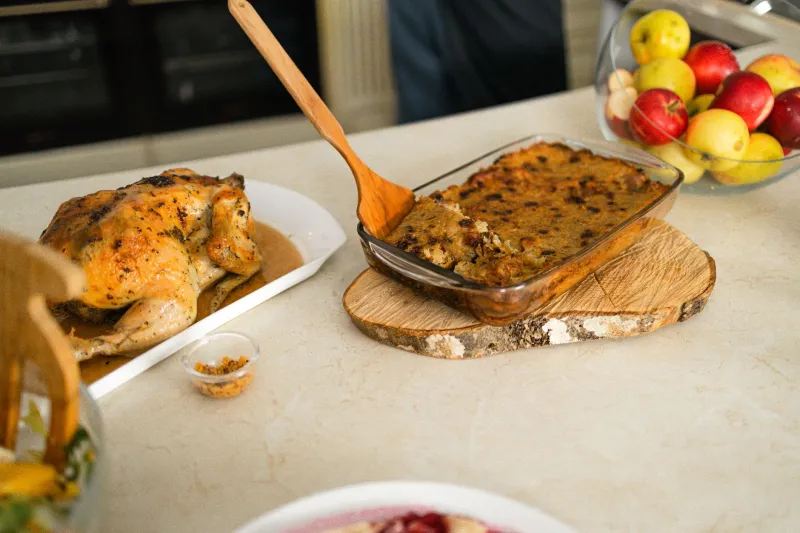
Pheasant is lean, and that is the first thing to remember. It benefits from a little protection in the roasting tin: a few rashers of bacon over the breast, a knob of butter under the skin, or a regular baste with the pan juices. A moderate oven suits it better than a fierce one. Roast at around 200C, 180C fan, gas 6, allowing roughly 35 to 45 minutes for a medium bird, depending on size and whether it has been trussed. Let it rest for at least ten minutes before carving.
If you are cooking an older bird, do not force it through a quick roast. Pot-roasting with stock, cider and root vegetables will give a more generous result. The legs can be removed and braised separately while the breast is roasted, which is a practical way to handle a bird that is not uniformly tender.
Partridge: small bird, quick roast
Partridge is smaller and quicker. It can be roasted whole at a higher heat, around 220C, 200C fan, gas 7, for about 20 to 25 minutes, depending on size. Keep it basted, and do not leave it in the oven once the juices run clear. Like pheasant, it is lean, so bacon or butter is a sensible addition rather than a luxury. One bird per person is a reasonable guide for a main meal, though smaller appetites may prefer to serve it with plenty on the side.
Because partridge is small, it is easy to overcook. If you are cooking several birds, give them room in the tin rather than crowding them. A little space lets the skin colour and the heat circulate evenly.
Venison: treat it like lean beef
Venison is often described as a strong meat, but much of the venison sold in Britain is mild and clean-tasting. Treat a haunch or loin with the respect you would give a lean beef roasting joint. Sear it if you can, roast at around 200C, 180C fan, gas 6, and use a meat thermometer if you want certainty. Rare to medium is the usual preference; overcooking will make it dry. Rest it well, then carve against the grain.
Shoulder and shin are better suited to slow cooking. They reward long, gentle braising with stock, wine or dark beer, and they make a good case for buying a larger cut and using it across two meals. Ask your butcher to bone and roll a shoulder if you want a neat roasting joint, or to cut shin into thick pieces for stewing.
A few honest kitchen notes
Game benefits from simple accompaniments: roast root vegetables, braised cabbage, a little fruit with venison, or a gravy made from the roasting tin. A splash of West Country cider in the pan is a reliable partner for pheasant and pork, though with venison a red wine or dark stock is often more suitable. Do not be tempted to drown the meat in strong sauces; the point of good seasonal game is that it tastes of itself.
Finally, remember that game is not uniform. Two pheasants of the same weight may differ in tenderness; a partridge may be younger or older than expected. The cook's job is to pay attention, test as you go, and be willing to adjust. That is not a flaw in the ingredient. It is part of cooking with meat that has a season and a sense of place.
Sourcing and seasonality
Pheasant and partridge are at their best from autumn into winter, while venison has its own calendar depending on species and management. Ask your butcher what is local and what is in good condition now. The aim is not to turn game into a specialist hobby but to place it beside the beef, pork and lamb that already anchor the counter. Bought with a little curiosity and cooked with a little care, it deserves that place.